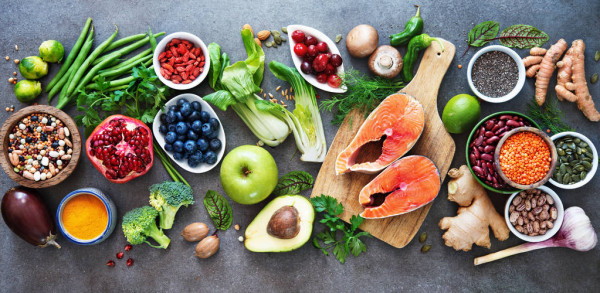

Healthy Is Improving Your Mental Wellbeing

Healthy Is Improving Your Mental Wellbeing

Control the highs and lows.

DID YOU KNOW

Did you know that when you breathe in your heart rate goes up? And when you breathe out your heart rate slows down. Meaning, you can control your stress response through your breath.

Or did you know that you can become 31% more creative and also reduce stress by practicing something as simple as a 2-minute gratitude practice each day?

Or that eating in a calmer state can lead to less inflammation, decreased fat storage, and can actually help improve your gut microbiome?

If you’d like to learn how to easily implement all of these improvements into your life, then check out our Healthy Is Wellness Calm challenges below!

Take control of improving your mental wellbeing with one of our Calm challenges.

HEALTHY IS CONTROLLING YOUR BREATH

Breathing is a vital part of wellbeing. Even more important than food and water, it is air that is the primary source of energy for the human body. Reduce stress by breathing through your nose, breathe using your diaphragm to positively affect your heartbeat, and focus on creating a smooth, continuous rhythm.

HEALTHY IS A HAPPINESS ADVANTAGE

Studies show that happier people are more successful and have better health outcomes. 90% of your long-term happiness is predicted by the way your brain processes the world. Activate neuroplasticity and literally rewire your brain through this daily gratitude practice from Dr. Shawn Achor of Harvard University.

HEALTHY IS 15 MINUTES OF “ME TIME”

Get recharged, relieve stress, enjoy life more, and boost mental wellbeing by planning for at least 15 minutes of time each day to invest completely and entirely into you.

HEALTHY IS A MIND-GUT CONNECTION

The mood you are in when you eat can influence everything from how your body digests the food to even the hormones you release. Explore this mind-gut connection with our challenge below.

HEALTHY IS A MORNING ROUTINE

The first few minutes after waking up paves the way for the rest of your day. Keeping this time stress free has major impacts on your mental and physical health, even helping combat cancer. Take control of your morning again with this challenge.

HEALTHY IS SPENDING TIME IN NATURE

Research shows that spending a little time each day surrounded by nature has been proven to improve mental health and boost your immune system.


Healthy is Pulling Nutritional Levers

Healthy is Pulling Nutritional Levers

When it comes to nutrition, there is more than one lever you can pull to improve your nutritional habits.

WHY IT MATTERS

When it comes to improving your nutrition, most of us often think about just changing what you eat or don’t eat. But science has shown there are two more levers that are equally as important: when you eat, and how much you eat.

when
what
how much

You goal should be to:

Always pull at least one lever

In other words, it’s not a wise decision to eat as much food as you possibly can, no matter what type of food, and at all times of the day. Aim to be pulling at least one lever at a time.

Often pull two levers at a time

Frame your nutrition goals by thinking about how much you can combine (1) what and when you eat, (2) how much and when you eat, or (3) how much and what you eat.

Rarely pull all three

Too often we think of a diet change and we pull all three levers at once. This is not necessary for long-term success.

Pulling the different levers

Lever 1: When you eat

Every 24 hours you can start to improve your nutrition by simply splitting your eating into chunks, like:

  • 12-12 (fast for 12 hours, eat in a 12-hour window)
  • 14-10 (fast for 14 hours, eat in a 10-hour window)
  • 16-8 (fast for 16 hours, eat in an 8-hour window)

Smaller eating window

when you eat

Larger eating window

Lever 2: What you eat

This can be framed by adding or taking away certain foods, or even following certain “rules” or “diets:”

  • Add: Eat More Genius Foods or Coloring Your Microbiome
  • Take away: Eliminate Inflammatory Fats or Reduce Refined Sugars
  • Rules: popular diets like Paleo, Keto, and the “Pegan Diet

Take away certain foods

what you eat

Add certain foods

Lever 3: How much you eat

This is the idea of eating more or less depending upon your goals.

  • Pay attention to portions at meals (larger or smaller)
  • Focus on number of meals per day (more or less)
  • Total calories can also be a guide for this lever

Eating less

how much you eat

Eating more

As with everything we do, start small and aim for convenience to your schedule. Small changes can lead to big impacts!

Healthy Is Eating Your Way Into Mental Wellbeing

Healthy Is Eating Your Way Into Mental Wellbeing

Can you “eat to beat” depression, stress, anxiety, and brain fog? According to the science coming out of the field of nutritional psychiatry, the answer is absolutely: yes!

WHY IT MATTERS

The world can prove to be quite stressful, especially recently, and your mental health can suffer during times where the environment feels out of your control. Unfortunately, too often we turn to foods that compound the problem by adding more stress and inflammation to your mind-body system. But it doesn’t have to be that way. In fact, did you know that:

  • Nutrition is the most important environmental factor within your control that affects your mental health
  • Overeating refined sugars, ultra-processed carbs, and inflammatory fats – some of the foods we crave to reach for when stressed – has been shown to directly inflame our mood, brains, and temper
  • There is a direct correlation between anxiety, depression, and memory loss, and too little of key nutrients like magnesium, omega-3 fatty acids, vitamin D, zinc, selenium, and the B-vitamins
  • A deficiency in omega-3 fatty acids and other nature-based nutrients makes it so your body’s messenger molecules won’t be able to communicate effectively with your brain

Make a change this month by using food to boost your mental health and improve your mood!

Boost your mental health and improve your mood: with food!

The first step to improve your mental health through nutrition is to eliminate refined sugars, ultra-processed foods, inflammatory fats, and artificial sweeteners. Then introduce more high-quality foods like the ones below to optimize your mental health.

NUTS & SEEDS

Nuts and seeds contain tryptophan, the precursor to serotonin, which stabilizes our mood, happiness, and memory. Other foods high in tryptophan include chicken, eggs, and turkey.

BERRIES

The purple, red, and blue colors found in blueberries, blackberries, raspberries, and others come from anthocyanins which have been shown to reduce depressive systems and boost cognitive function.

FATTY FISH, SALMON, & OYSTERS

60% of your brain is made of DHA – an essential anti-inflammatory omega-3 fatty acid. Oysters, salmon, and fatty fish like tuna, sardines, cod, and trout are high in omega-3s and should be consumed regularly.

FERMENTED FOODS

Sauerkraut, yogurt, kombucha, kimchi, miso, and other fermented foods feed and improve your gut microbiome which makes serotonin, manufactures vitamins, and improves your immune system.

HERBS & SPICES

Spices like cinnamon, cloves, turmeric, and even black pepper; and herbs like rosemary, sage, and oregano are especially high in polyphenols which can keep your blood vessels healthy and flexible, and improve every part of your mental wellbeing.

“Let food be thy medicine.” – Hippocrates

Healthy Is Win the Morning

Healthy Is Win the Morning

“Creating a morning ritual that includes priming is the perfect way to start your day.”


– Tony Robbins

Did you know that scientific research shows that you can prime your body and mind to be in an enhanced state of readiness?  In other words, you don’t have to rely on luck or just hope you have a successful, good, happy day; you can actually make that happen with a proper “warmup” morning ritual.

Professional athletes know this well.  A professional athlete doesn’t just leave it up to luck or hope that they have a great game. They prepare and prime their bodies and minds to be in the best possible state through an established pregame warmup routine. And what matters most is not the length of that warmup, but rather making sure that the routine has the few proper ingredients necessary to properly prime the body and the mind to perform at their peak states.

You can take advantage of this same priming effect to make every day the best possible day, full of happiness and success, by choosing each day to prime your mind and body with a short “win the morning” routine!

Don’t Underestimate the Power of a 5-Minute Routine

You’ve probably heard before about the benefits of a morning routine, but if you aren’t implementing one right now it’s probably because you’re not making it convenient and easy enough for your unique, busy schedule. Just like a warm-up to prime the body for a sporting event doesn’t have to be very long – it just has to open your body’s range of motion, fire muscles through that full range of motion, and get the body ready for the movements it’s about to make in the event ahead – your “win the morning” routine does not have to be very long.

It just has to include these 3 steps:

Step 1: Prime Your Body

Your body is what allows you to move in this physical world, and its state of readiness affects everything else you’ll do today. Start your morning routine by firing your core and large stabilizing muscles, then perform a short stretch of any muscles that tend to get tight throughout the day (i.e. ankles, hip flexors, shoulders).

Step 2: Prime Your Mind

Your mind is the entity that consciously directs the body, and also subconsciously scans your internal and external environments constantly – taking in millions of bits of data per second.  You can immediately set yourself up for a better interpretation of that data and more positive, productive day by “priming your mind.” Priming your mind includes taking time to spark your creativity, aligning your thoughts and emotions with your goals, and prepping to live each day of your life in a peak state.

Step 3: Prime Your Whole Nervous System

In sports we use the term “neuromuscular activation” to describe the high-intensity sprints or all out sports movements that a player performs as they end their warm-up and prep to go into the game at their maximum.  The point of this activation is to prime the whole nervous system to be ready to take on the challenges of the game ahead. Though it can be accomplished through things like sprints or all out efforts that involve the whole body, it can also be accomplished through more feasible at home activities like the ones listed below.

Just Breathe

Just Breathe

Just Breathe

Written by Dr. Nich Pertuit, PhD

Healthy Is Wellness is here to empower you… all you have to do is breathe!
Want to know who is in control of your health?

YOU!

Want to know what is NOT in control of your health?

Anything that is outside of you.

Want to know one, simple, easy thing you can start doing today (and you already do it anyway) that immediately leads to controlling and lowering the stress in your body?

Just breathe!

BREATHE ONLY THROUGH YOUR NOSE

Not just any type of breathing. Breathe only through your nose. In through your nose. Out through your nose. Gentle. Easy. Smooth. Nose only breaths.

Is there science to this?

Yes! Nasal breathing releases nitric oxide (which opens up your blood vessels letting blood flow smooth and easy), it helps keep you hydrated (yep, you read that correctly), and it activates the parasympathetic nervous system (“para” like in “parachute” in this context means to bring down safely and gently; so it brings down the sympathetic/stress system to a de-stressed mode).

The Most Natural Method

This strategy is used by professional athletes and meditation experts alike. You can feel the benefits of this within 30 seconds, and if you spend the whole day breathing through your nose you will be using the most natural method of de-stressing that you already have built into your amazing human body system.

Your challenge today and this week:

Just breathe through your nose.
In through the nose.
Out through the nose.
Smooth and relaxed is what you should be thinking about.
The Mind-Gut Connection

The Mind-Gut Connection

The Mind-Gut Connection

Written by Dr. Nich Pertuit, PhD

Did you know it is not just the type of food that you eat, but also the mood you are in when you eat that food, that can influence everything from how your body digest the food to even the hormones you release?
We already know that eating more plant-based fibers – in particular eating a rainbow of colors of fruits and vegetables – is critical to the health of your gut microbiome.

Your gut is very complex and, as we know, very important to your overall health. The lining of your gut, though, is not just mechanical in its breakdown and digestion of the food you put into our body. The lining of the gut is actually studded with a huge number of endocrine cells – specialized cells that contain up to 20 different hormones!

In fact, if you could clump up all of the endocrine cells in the gut into a single mass, it would be larger than all other endocrine organs – your thyroid gland, pituitary gland, gonads, and adrenal glands – combined. This means that the way that hormones are released throughout the body is drastically influenced by the gut and its amazing internal nervous system.

Hyperlinked

The gut and the brain are linked through bidirectional signaling pathways that include nerves, hormones, and inflammatory molecules. The close interactions of these pathways play a crucial role in emotions and in optimal gut function. What you eat affects how you feel, and how you feel affects the way your body digests food.

Bet you didn’t know that your gut has its own nervous system? This system is so complex and intricate that it has capabilities that surpass all other organs and even rival your brain’s nervous system!

This system is called the Enteric Nervous System, or ENS. The ENS is made up of hundreds of millions nerve cells – more than contained in your spinal cord – and the only organ that outnumbers it in number of nerve cells is your brain. For this reason, the ENS is often referred to as your “second brain.”

f

Although the ENS is a part of the autonomic nervous system, which is ultimately controlled by subconscious regions of the “first brain” like the hypothalamus, it can also operate independent of that system.

In other words, its neurons aren’t just there to receive input from your central nervous system, they are there to send signals back into the brain itself.

Over 90% of your serotonin and over 50% of your dopamine, the neurotransmitters that you know for making your brain feel good – they are formed right there in the ENS. Providing even more evidence that when take care of your gut, your brain and body also thrive.

As amazing as your gut’s enteric nervous system is at turning food into energy for all cells in your body, your emotional brain can mess up nearly every single automatic function when you eat in a stressed out state.

If your brain decides there is a threat to deal with, it will aim to take care of that threat by responding within milliseconds to put your body into a “fight or flight” mode. New research shows that eating while in this stressed out state can negatively change your microbiome, increase fat storage, damage the lining of the gut, increase inflammation, and even cause the stomach to reverse its process and empty its contents upward.

Needless to say, finding a way to relieve some stress before you eat is paramount in your overall health.

Do Not Eat In A Stressed Out State

Find ways to eat your food while in a calm state. The research on this is clear: if you eat while you are stressed out, your body will not digest the food properly, you are more likely to store what it does digest as fat, your colon secretes more water and mucus, your gut wall begins to leak, and the amount of blood flowing through the lining of your stomach and intestines increases. 

Some of our favorite strategies for calming yourself before you eat:
  • Practice gratitude right before you eat. If you’re eating a meal it means two great things: you’re alive AND you have food to keep yourself alive. Those are two great things to be thankful for! Pause before you eat, give thanks for the food in front of you, smile, and then enjoy your meal.
  • Take four deep breaths. Expand your rib cage out so it feels like your ribs are opening up like an umbrella, hold your breath for just a two count, and then breathe out fully. Taking just four deep breaths before you eat lowers your stress significantly.
  • Sit down at a table and enjoy the process of eating. This can be accomplished with friends or by yourself. But working, driving or rushing from one spot to another while you eat will only increase your stress. Consider meal time a break in your normal busy day, and sit down to enjoy this process.
  • Listen to music that calms you and makes you happy while you eat. Restaurants have long used music to set the mood for your eating experience. You can utilize this strategy by turning on your own calming and enjoyable music at every meal.
  • Prepare the food yourself. The act of preparing a meal has been shown to be as soothing as meditation. Plus, it’s a great social thing to do with friends and family. The Italians are well known for this, and they consistently are ranked as being one healthiest countries in the world. If possible, make the preparation of food part of your family or social eating experience.

Want to know more about more about the Mind-Gut Connection?

Check out this excellent book by Mayer, Dr. Emeran. The Mind-Gut Connection: How the Hidden Conversation Within Our Bodies Impacts Our Mood, Our Choices, and Our Overall Health. Harper Wave, 2016. https://emeranmayer.com/book/

The Mind-Gut Connection

Print out this PDF version and post on your fridge!