

Healthy Is Adding Rhythm

Healthy Is Adding Rhythm

Did you know that the 2017 Nobel Prize for Medicine and Physiology was given to researchers who proved that every cell in the body has a circadian (daily) clock?

In other words, these researchers discovered that we all operate best and are at our healthiest when our bodies and minds find rhythm each day.

“For many years we have known that living organisms, including humans, have an internal, biological clock that helps them anticipate and adapt to the regular rhythm of the day,” said Jeffrey C. Hall, Michael Rosbash and Michael W. Young, the researchers who were able to peek inside our biological clock and elucidate its inner workings. “Our discoveries explain how plants, animals and humans adapt their biological rhythm so that it is synchronized with the Earth’s revolutions.” – NobelPrize.org

The research from this Nobel Prize shows that our bodies and minds work at their optimum levels when the peripheral clocks in all of the cells of the body are synced well with the master clock in our brain through our daily behaviors.  More succinctly: they discovered that every cell in our body works best when we Add Rhythm to our lives.

That’s why this month, we are focusing on monthly challenges that Add Rhythm to your life and allow your body to restore itself to optimal health.

Challenge 1: Healthy Is a Sleep Date

Our “Healthy Is a Sleep Date” challenge teaches you how to create an optimal “warm-up” to achieve better sleep.
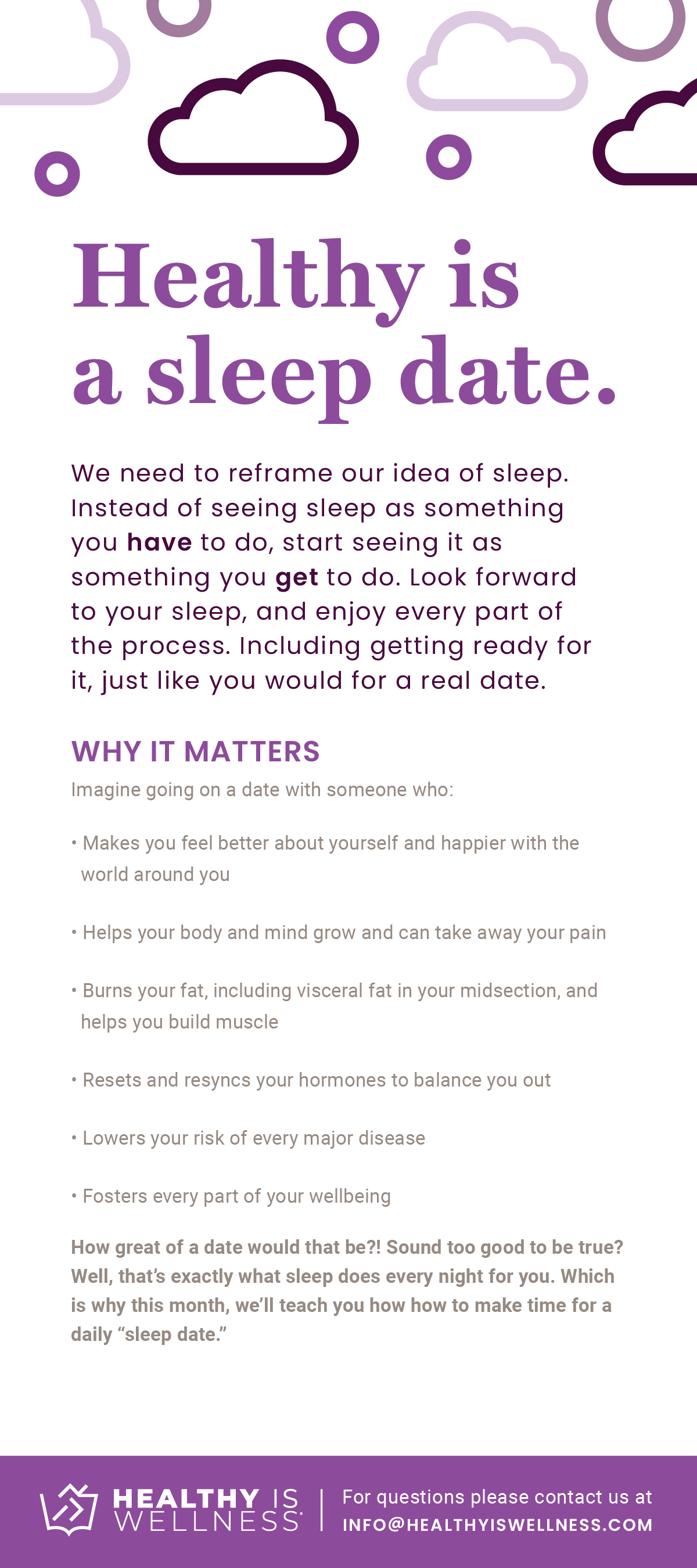
There is perhaps no behavior more powerful in syncing your daily rhythms than prioritizing quality sleep.  Take, for example, sleep’s drastic effect on something as important to your health as your immune system.

Sleep has substantial regulatory effects on the immune system. And it does so in a rhythmical manner. Circulating immune cells peak early in the night and then slowly make their way into lymphoid organs where they get to work ridding your body of virally infected cells. Lack of sleep for just one night not only reduces the ability of your body to fight current infections, but it can also reduce your natural killer (NK) cell count by 70%! That’s not good news, because NK cells – a type of white blood cells – help keep us safe from both acute diseases, like the cold and flu, as well as chronic diseases like cancer.

But, if you resume sleeping 7+ hours per night, then in just one night NK cell activity can return to its baseline level. Additionally, getting 7+ hours of quality sleep leading up to something like a flu shot can help you produce double the amount of antibodies, making the shot even more effective!

Sleep is critical for every major system in the body:


  • Memory improves by over 60% after a good night’s sleep;
  • body composition, weight, and your diabetic profile (your body’s ability to regulate glucose) are all negatively altered by less than 6 hours of sleep;
  • muscle mass, testosterone, and growth hormone are all influenced by sleep; &
  • your thyroid, adrenal hormones, & ultimately your entire hormone axis are all affected by your sleep patterns!

Challenge 2: Healthy Is 15 Minutes of “Me Time”

When was the last time you did something that allowed you to take a break and feel truly relaxed?

Taking time to do something relaxing and enjoyable for yourself is not just a “good idea,” it’s actually as important to your health as exercising, sleeping, and eating healthy.

A lot of us spend most of our day in fight or flight mode and releasing excess cortisol because we are responding to the many stressors that come our way each day. When cortisol levels from chronic stress stay very high for extended periods of time, research shows that:

  • Risk of chronic disease, chronic inflammation, and immune dysfunction are all heightened.
  • Muscular strength, energy levels, and sex drive are all negatively affected.
  • Weight gain, inability to lose weight, and sleep disruption occur more often.

You can reverse these negative trends by activating a different part of your nervous system and de-stressing your body by adding rhythm with 15 minutes of “me time” every day.

Challenge 3: Healthy Is Spending Time in Nature
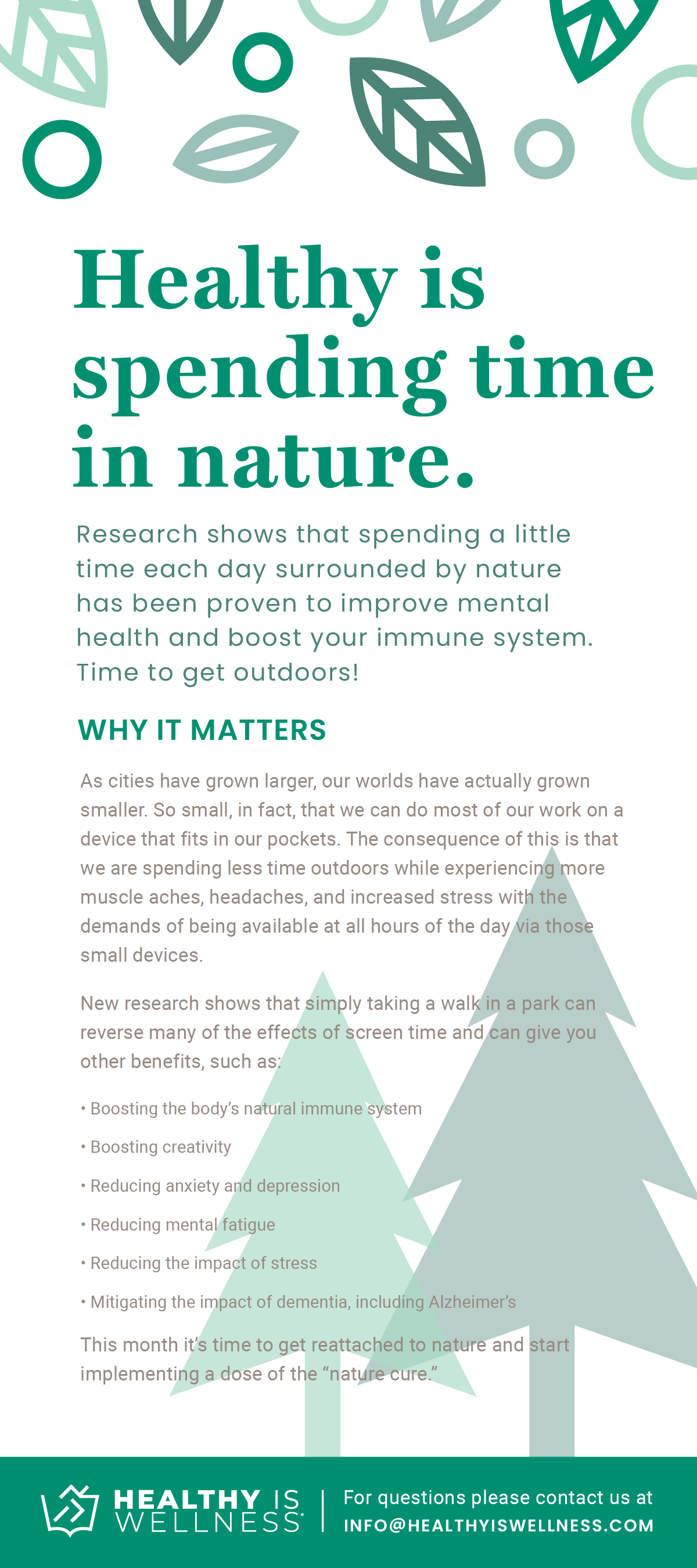
As cities have grown larger, our worlds have grown smaller; so small that we can do most of our work on a device that fits in our pockets. We are spending less time outdoors while experiencing more muscle aches, headaches, and increased stress with the demands of being available at all hours of the day.

Research shows that spending a little time each day surrounded by nature has been proven to improve mental health and boost your immune system. In fact, simply taking a walk in a park can reverse many of the effects of things like screen time and can give you other benefits such as:

  • Boost your body’s natural immune system
  • Improve creativity
  • Reduce anxiety and depression
  • Reduce mental fatigue
  • Reduce the impact of stress
  • Mitigate the impact of dementia, anxiety, and other mental health diseases, including Alzheimer’s Disease

This month it’s time to get reattached to nature and adding rhythm to your life by implementing a dose of the “nature cure.”

Which one of these are you planning to implement this month? Come see us at one of our September events and let us know!


Healthy Is Controlling Your Breath

Healthy Is Controlling Your Breath

Breathing is a vital part of well-being. Even more important than food and water, it is air that is the primary source of energy for the human body.

WHY IT MATTERS

Breathing is not binary. In other words, breathing = a “good” thing because it means you’re alive. And not breathing = “not good” because you are either dead or unconscious. But it’s not just whether you’re breathing or not; how you breathe affects your body’s ability to use the air it takes in from your environment.

Breathing is directly correlated to your emotional and physical well-being, and how you breathe can instantly impact your nervous system and, therefore, all parts of your body.

Given that we take 20,000 – 25,000 breaths per day, if you’re doing that in a dysfunctional way it’s going to affect your health. Let’s turn every one of those breaths into an opportunity to improve your health, every day!

The Three Steps

STEP 1: BREATHE IN THROUGH YOUR NOSE

Breathing through your nose filters, warms, and humidifies the air you breathe, making it easier for your lungs and muscles to use oxygen. Nasal breathing eliminates brain fog, boosts energy, and has been proven to boost learning and memory. Your nose is also the first line of defense against allergens and pathogens.

Try one of the following to start breathing through your nose more often:

Breathe only through your nose for the first hour of each day. Lower your blood pressure and start the day with a boost of energy by focusing on breathing only through your nose for the first hour of each morning.

Humming. Humming forces us to breathe through our nose. By humming for a couple of minutes the nitric oxide that gets released from our sinus cavities has been shown to increase by 15-fold! Nitric oxide lowers stress, improves blood flow, and even has instant beneficial effects on our immune system.

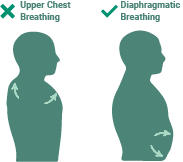
STEP 2: ACTIVATE YOUR DIAPHRAGM BY EXPANDING YOUR ENTIRE RIBCAGE

It should feel like your ribcage is an umbrella opening up, expanding on all sides when you inhale.

STEP 3: MAKE IT CONTINUOUS FROM BREATH TO BREATH

Imagine the waves of an ocean smoothly coming onto a beach, then receding, then pushing onto the beach again, then receding. This is the sort of rhythm you are trying to create.

That’s it. Practice these three steps every day and be prepared to feel the difference in your well-being that proper breathing can instantly initiate!

For me, the perfect breath is this: inhale for about 5.5 seconds, then exhale for 5.5 seconds. That’s 5.5 breaths a minute for a total of about 5.5 liters of air. You can practice this perfect breathing for a few minutes, or a few hours. When we breath like this… circulation in the brain and body will increase while the burden on the heart decreases.

– James Nestor, Breath: the new science of a lost art

Healthy is Practicing Gratitude

Healthy is Practicing Gratitude

The happiness advantage from practicing gratitude.

There is something called the Tetris Effect (yes, named after the video game) that occurs when we consistently devote our time and attention to something, and then we start seeing that thing over and over again. You’ve experienced this if you’ve ever been shopping for a car. Maybe you’ve decided that you’re going to get a red vehicle, then suddenly you see red vehicles everywhere you go. What happened? Did everybody else have the same idea as you and beat you to the punch?

The answer is no; because of the time and attention you’ve focused on that attribute, your brain is now primed to be looking for those things, even at the subconscious level, and you’re suddenly spotting them everywhere So, what does all this have to do with happiness and gratitude? In its default state your brain is hardwired to constantly be looking for threats to your survival, and will constantly be doing so unless you prime it to do otherwise.

Happiness is at the peak of psychological health.

When our brains get stuck in a pattern that focuses on stress, negativity, and failure (as is our default) we set ourselves up to fail. The positive side of the Tetris Effect, though, actually teaches us how to retrain our brains to spot patterns of possibility, so we can see—and seize—opportunity wherever we look. The way we can do this is by taking time to intentionally train our brains to start scanning the world for good things everyday. And the most amazing part? It only takes a couple of minutes each day to train our brains to do this!

WHY IT MATTERS

One of the best ways to kick start a positive Tetris Effect is to simply take time each day to write down 3 things you’re grateful for. In this two-minute span, if you continue this for 30 days in a row, research has shown benefits like:


  • 31% increase in productivity and creativity;
  • Stronger immune system and less sick days;
  • Reduction in blood pressure;
  • Improved cardiovascular health;
  • Reduction in perceived stress and pain; and
  • Enhanced mood and mental wellbeing!

Practice gratitude daily.

Rewire your brain in just 2 minutes per day with this gratitude exercise to become happier, healthier, and more efficient in all of your tasks. Each day write down 3 things you’re grateful for. They don’t have to be profound – it could be a good cup of coffee, the warmth of a sunny day, or listening to your favorite song. It doesn’t matter what it is as long as you write it down somewhere, whether in a notebook, on a napkin, or typed into your phone.

We’re finding it’s not necessarily the reality that shapes us, but the lens through which your brain views the world that shapes your reality.  And if we can change the lens, not only can we change your happiness, we can change every single educational l and business outcome at the same time.” – Shawn Achor, happiness expert, international best-selling author, & Harvard professor

Healthy Is Spending Time in Nature

Healthy Is Spending Time in Nature

Research shows that spending a little time each day surrounded by nature has been proven to improve mental health and boost your immune system. Time to get outdoors!

WHY IT MATTERS

As cities have grown larger, our worlds have actually grown smaller. So small, in fact, that we can do most of our work on a device that fits in our pockets. The consequence of this is that we are spending less time outdoors while experiencing more muscle aches, headaches, and increased stress with the demands of being available at all hours of the day via those small devices.

New research shows that simply taking a walk in a park can reverse many of the effects of screen time and can give you other benefits, such as:


  • Boosting the body’s natural immune system
  • Boosting creativity
  • Reducing anxiety and depression
  • Reducing mental fatigue
  • Reducing the impact of stress
  • Mitigating the impact of dementia, including Alzheimer’s

This month it’s time to get reattached to nature and start implementing a dose of the “nature cure.”

Embrace nature.

This month try to spend increased amounts of time at a park, woodland, a beach, or on a nature trail. How much time? 15 to 20 minutes a day has been shown to improve health and well-being.

AT HOME
  • Walk in the grass either at your house or in a park without your shoes on; this is a connectivity strategy and only takes 15 minutes a day
  • Hike a trail for a total of 2 miles
  • Walk around your neighborhood looking at all the trees, look for birds’ nests and animals; this will connect you to the local nature that you have
AT WORK
  • Take a 10-minute break by putting on headphones and playing ocean sounds at your desk
  • Take a 30-minute walk every day at lunch to a nearby park
  • Keep live plants in your office that require your attention and care every day
Start small

Your goal is to increase your exposure to natural beauty of the surrounding area. If you live in a large city, then find an urban park. Take small steps at first and when you are ready for bigger adventures head further outside city limits.

I took a walk in the woods, and came out taller than the trees. – Henry David Thoreau
Healthy Is Designed to Move

Healthy Is Designed to Move

Did you know?

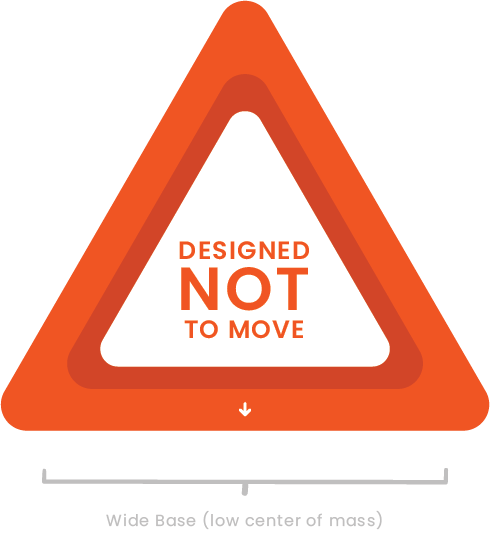
One of the most stable shapes in the universe is a triangle. Its wide base and low center of mass make it nearly impossible to move. That is why the pyramids across the world haven’t gotten up and walked away. They’ve stayed in place for thousands of years because they were designed NOT to move.

HUMANS, ON THE OTHER HAND, ARE THE INVERSE OF THIS STABLE SHAPE.

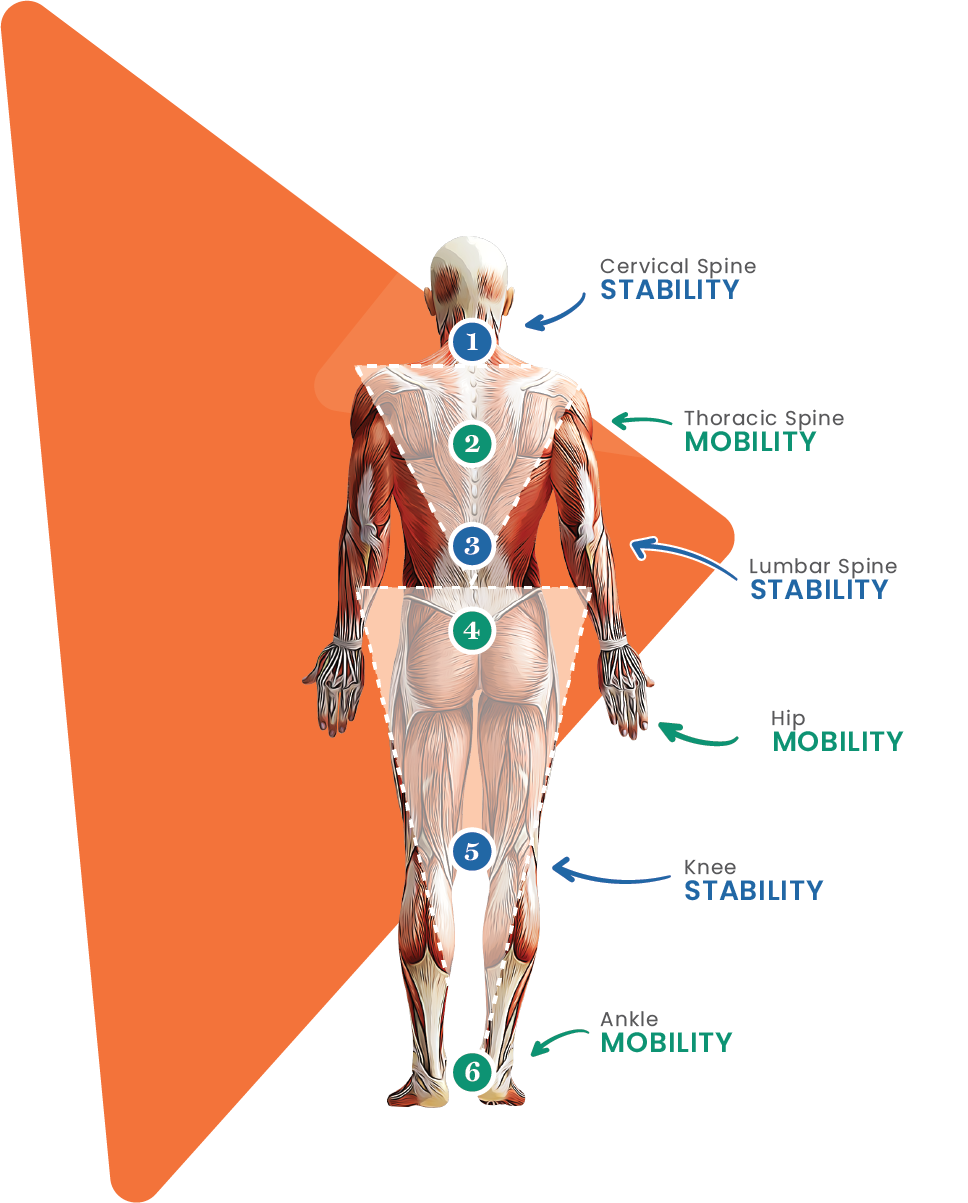
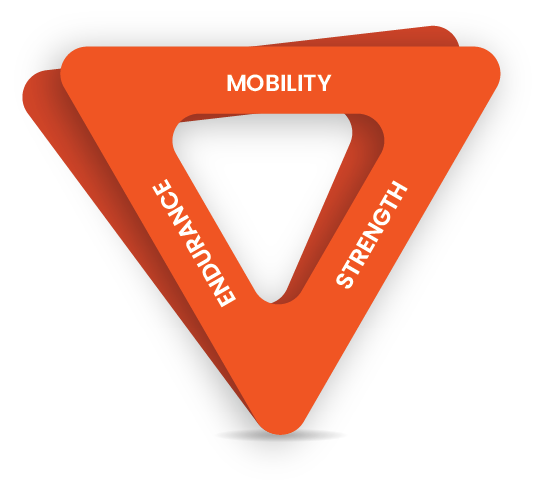
Our bone structure is actually two upside-down triangles stacked on top of each other: wide shoulders to a narrow spine, then wide hips to narrow feet. We were not designed to stay in one place; we were Designed to Move!

Balancing being Designed to Move.

WHY IT MATTERS

When it comes to improving your physical activity and movement, most of us often think about just adding more activity in the area we’re already doing a lot in. But research shows that our greatest activity and movement gains can actually come from adding to the area you’re doing the least in.

MOBILITY

There is perhaps no other area that limits our movement more than losing mobility in our joints. When we lose the ability to move our joints through a complete range of motion, not only does it cause problems for that joint; it also adds strain, pain, and stress to the joints surrounding it.


  • Stretch every day. Your muscles are like rubber bands that stay more limber when they’re stretched regularly.
  • Sit on the ground. Continually sitting in chairs tightens up the same muscles in our hips, back, and neck. If you’re going to sit to watch that show or read that book, can you do it sitting on the ground?
  • Do Pilates! Or yoga, or foam rolling, or any other workout that decreases tightness and increases mobility of numerous joints.
STRENGTH

While strength can be defined as the ability to produce force or movement, stability is the ability to control it. Building strength while focusing on controlling your movements increases both strength and power. Carry heavy objects, dig holes, climb, and make your body do things that awaken and delight your nervous system as much as they do your muscles!


  • Use your muscles. Find ways in the day to use your muscles instead of machines (i.e. take the stairs instead of the elevator).
  • Pick up and carry heavy things, or push and pull things that engage lots of muscles. You were designed to move, and you were also designed to carry, push, and pull things from here to there.
  • Add high intensity. Find ways to do shorter exercise bouts, but do them at higher speeds and with higher power outputs while taking longer rests.
ENDURANCE

The most important way to foster this area is to walk! Yes, you can compete in endurance events, but you don’t have to in order to take advantage of the majority of the health benefits of this endurance category. Try to do one of the following on a daily basis.


  • Sit less, move more. At the most basic level, find ways to add more walking and movement to your day. Park further away or take your phone meeting while on a walk; remember, you were designed to move!
  • Move for extended periods of time. Go walking, jogging, swimming, climbing, skiing, rowing – anything you enjoy that involves moving your body – for 15+ minutes at a time.
  • Get your sweat on! When you sweat it means you’re activating heat shock proteins that have vast, long-lasting health benefits, including living longer with a better healthspan!
PAY ATTENTION TO WHICH ACTIVITIES YOU’RE SPENDING THE MOST TIME ON, AND THEN TRY TO FIND WAYS TO CONVENIENTLY ADD THE OTHERS INTO YOUR DAILY LIFE. SMALL CHANGES = BIG IMPACTS.
Coloring Your Microbiome

Coloring Your Microbiome

Coloring Your Microbiome

Written by Dr. Nich Pertuit, PhD

You’ve probably heard the advice “eat a rainbow” of food colors every day… but do you know why?
One of the reasons is that this variety is good for the bugs that live in our gut, and their associated genes, collectively known as our microbiome. Think of your microbiome as like a micro-bug staff that are made up of different experts for different jobs, but all working together. To maintain optimal health, we need to ensure that all departments are adequately staffed, and that all teams are appropriately proportionate. A healthy microbiome has all departments busily working on different functions, while an unhealthy microbiome has departments that have been shut down or are understaffed, so not working properly.

So how do you fix your microbiome to become a healthy, fully staffed factory helping us in all areas of our health?

Good news: Our gut bugs love plant-based fiber! For example, when the fiber in broccoli gets as far as your large intestine, it finds itself in the place where a vast majority of your microbiome lives, and the gut bugs feast on it. When we feed these little guys different colors of vegetables, our microbiome will start changing within two to three days!

Different colors = feeding a variety of beneficial bacteria!

Getting 5 different vegetables (and some fruit and nuts) into your diet will accelerate the process of optimizing your microbiome!
Scientists have been diving deeper into understanding our microbiome, and now know that without a doubt they are extremely important to both our physical and mental health:
According to a 2014 research study, the incredible complexity of the microbiome means that in healthy individuals there are more “non-human” cells in our body than actual human cells.
These non-human “bugs” have evolved over millions of years and live off the food that we take in, and in return they provide services like making serotonin (the hormone linked to your mood); manufacturing vitamins; regulating allergies; and improving our immune system.
Heart disease, stroke, and Alzheimer’s are just a few of the diseases that can be prevented and reversed by properly feeding the diversity of our microbiome.
Challenge yourself to keep track of your veggies for 2 weeks:
These charts come from Chatterjee, Dr. Rangan. How to Make Disease Disappear. HarperOne, 2018.

To find out more about Dr. Chatterjee’s book and his methods, check out his website: https://drchatterjee.com/how-to-make-disease-disappear/

Color Your Microbiome

Print out this PDF version and post on your fridge!